

Table of Contents
- What Natural Looking Brow Tattoo Results Actually Look Like
- Powder Brows vs Microblading: Which Technique Suits Your Skin
- Microblading Results Before and After: A Photo-Based Timeline
- Eyebrow Tattoo Healing Stages: What to Expect Week by Week
- How Long Do Eyebrow Tattoos Last? Fading, Touch-Ups, and Longevity
- Customizing Your Brow Shape and Pigment for a Realistic Look
- Conclusion: Booking Your Natural Looking Brow Tattoo Results
- Frequently Asked Questions
Last Updated: October 16, 2026
What Natural Looking Brow Tattoo Results Actually Look Like
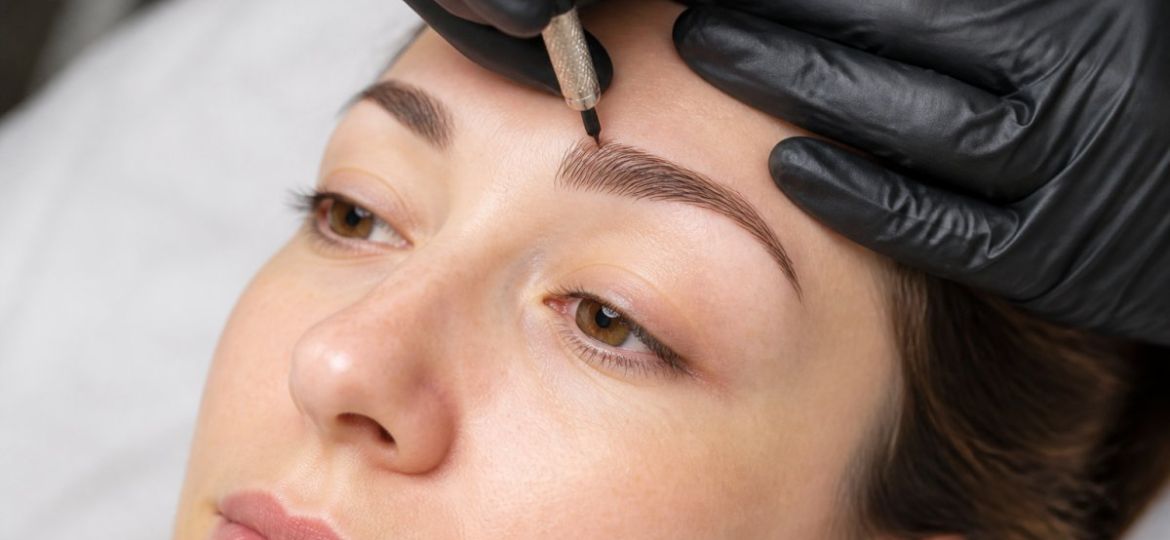
Natural looking brow tattoo results are semi-permanent cosmetic enhancements that mimic the appearance of real eyebrow hair, using pigment implanted into the upper layers of the skin to create soft definition and a realistic look.
The best outcomes share three traits: hair-like strokes that follow your natural growth pattern, a pigment shade matched to your existing brow hair, and a shape built around your facial features rather than a trend.
What most guides miss is that the result you see on day one is not the result you keep. Pigment softens significantly through the healing process, which is why a skilled brow artist plans for the healed outcome, not the immediate one.
Powder Brows vs Microblading: Which Technique Suits Your Skin
The powder brows vs microblading decision comes down to skin type and the look you want. Microblading uses a manual tool to deposit fine, hair-like strokes that mimic individual brow hairs. Powder brows, also called ombre brows, use a digital machine with a fine needle to build soft, shaded definition that resembles filled-in brows.
| Technique | Best For | Finish | Skin Type Match |
|---|---|---|---|
| Microblading | Sparse brows, dry skin | Hair-like strokes | Normal to dry |
| Powder brows | Oily skin, all densities | Soft shaded look | Oily to mature |
| Nano brows | Sensitive skin, fine detail | Hyperrealistic strokes | Most skin types |
| Hybrid brows | Mixed density, blending | Strokes plus shading | All skin types |
Oily skin is the deciding factor more often than people expect. Microblading strokes can blur on very oily skin over time, while powder and ombre techniques hold their soft definition longer.
If you have combination skin, ask your practitioner to map your T-zone before choosing a technique. The forehead’s oil production affects how microblading strokes heal, even when the brows themselves look dry.
Microblading Results Before and After: A Photo-Based Timeline
Day 1 (immediately after): Brows look 30 to 40 percent darker and more defined than the healed result.

Days 3 to 7 (flaking): The treated skin begins to shed.
Weeks 2 to 3 (the ghost phase): Color appears to vanish or turn ashy. Many clients assume the work failed.
Week 4 (healed): The true color emerges, typically 20 to 40 percent softer than day one, with strokes that read as individual hairs rather than drawn lines.
Weeks 4 to 6 (touch-up): A refinement session fills any areas where pigment faded unevenly and adjusts shape. Confirm before booking.
How Results Differ by Skin Type and Brow Condition
Naturalness is not one look, it is a match between technique and your skin. A common pattern practitioners see:
- Oily or combination skin: Microblading strokes tend to blur and spread over time, so powder, ombre, or hybrid techniques hold crisper definition. Expect a slightly softer healed stroke than a dry-skin client.
- Dry or mature skin: Strokes stay sharper, but mature skin can be thinner and less elastic, so pigment may fade faster and require earlier touch-ups.
- Sensitive or reactive skin: Nano brows (a digital machine with a very fine needle) often cause less trauma and heal more predictably than manual microblading.
- Sparse brows: A hybrid approach, machine strokes plus light shading, fills gaps while keeping a hair-like read. Pure shading on sparse brows can look flat.
- Existing brow hair with uneven density: Shading between natural hairs blends the work into what you already have, which is what makes the result read as “her brows” rather than “her tattoo.”
How to Assess Natural-Looking Results in a Portfolio
When you review an artist’s work, run this checklist:
- Ask for healed photos at the four-week mark, not day-one shots. Healed photos are the only honest measure of an artist’s work.
- Check stroke direction. Strokes should follow your natural growth pattern, angling outward and upward toward the tail, not running uniformly vertical.
- Look at symmetry, not mirror-image perfection. Real brows are sisters, not twins. Perfectly identical brows often look artificial.
- Judge pigment tone. Healed color should sit close to your brow hair shade, with no warm red or ashy gray cast.
- Find examples on skin like yours. A flawless result on dry, fair skin says little about how the same technique will heal on oily or deeper-toned skin.
Bring your own bare-face photo to a consultation and ask the artist to show you a healed client with a similar skin type and brow density. If they cannot, that is useful information.
Eyebrow Tattoo Healing Stages: What to Expect Week by Week
Eyebrow tattoo healing stages follow a predictable pattern, and knowing them prevents unnecessary worry. The treatment process includes consultation and shape customization.
- Days 1-2: Brows are dark, bold, and slightly tender. Pigment is at its most intense.
- Days 3-7: Flaking begins. Do not pick or scratch, as this pulls pigment and creates gaps.
- Weeks 2-3: Color appears to vanish or turn patchy. This is the “ghost phase” and it is temporary.
- Week 4: Healed color returns, softer and more blended with your natural brows.
- Week 4-6: Touch-up session refines the result.
Aftercare drives longevity. Keep brows dry for the first week, avoid direct sun exposure, and skip harsh skincare acids over the brow area. A common mistake is over-moisturizing during flaking, which softens the flakes and causes premature pigment loss.
Picking at flaking pigment is the single most common cause of patchy healed brows. If you scratch a flake off early, you remove pigment with it, and that gap will need to be corrected at your touch-up.
How Long Do Eyebrow Tattoos Last? Fading, Touch-Ups, and Longevity
How long do eyebrow tattoos last depends on skin type, lifestyle, technique, and, critically, pigment chemistry. Most cosmetic brow tattoos hold their shape before requiring a refresh, but that range hides a lot of variation. Two clients treated on the same day by the same artist can see meaningfully different fade timelines.
What Actually Drives Fading
Fading is not one process. It is several happening at once:
- Skin turnover: Your epidermis constantly renews, carrying pigment particles upward and out. Faster turnover means faster fade.
- Oil production: Sebaceous glands in the brow area can break down pigment particles over time, which is why oily skin fades faster and often less evenly.
- Sun exposure: UV light degrades pigment (pubmed.ncbi.nlm.nih.gov). Daily sunscreen over the brow area can extend longevity.
- Exfoliating acids: Retinoids, AHAs, and BHAs applied near the brow accelerate pigment loss. Many skincare routines quietly shorten brow tattoo life.
- Depth of implantation: Pigment placed too shallow fades quickly; too deep can blur or shift color. This is a skill variable, not a client variable.
Pigment Color Changes Over Time
This is the part most result-focused guides skip, and it is one of the most important long-term decision factors. Pigments do not simply lighten, they can shift hue.
- Warm shifts: Some pigments fade toward red, orange, or salmon tones. This is common with older iron-oxide-based formulations and with pigments placed too shallow.
- Cool shifts: Others fade toward gray, blue, or ashy tones, often when pigment is placed too deep or when carbon-based blacks are used on certain skin tones.
- Clean fade: Well-formulated pigments chosen for your skin undertone fade gradually toward a lighter version of the original shade, the ideal outcome.
The cause is usually a combination of pigment composition, implantation depth, and your skin’s undertone. This is exactly why a consultation matters: an experienced practitioner assesses your skin and selects pigments formulated to fade cleanly rather than shift.
Correction and Removal Risks
If you are unhappy with existing work, the path forward is not simply “more pigment on top.” Correction is a different skill set than first-time application, and it carries its own risks:
- Layering over warm or gray pigment can compound the color problem rather than fix it.
- Correction typically takes longer and may require multiple sessions spaced weeks apart.
- Removal options include saline removal and laser, each with trade-offs in cost, downtime, and risk to surrounding hair.
- Not every artist offers correction. Ask specifically whether the practitioner has experience correcting prior work, and request healed correction photos.
Realistic Expectations and Individual Variation
A candid point that promotional before-and-after content tends to skip: results vary, and asymmetry is normal. Your two brows may not be perfectly symmetrical to begin with, and a good artist works with your natural structure rather than forcing a mirror image. Touch-ups are not a sign of failure, they are a planned part of the process, and most artists schedule the first one four to six weeks after the initial session.
Maintenance is straightforward. An annual or biennial touch-up keeps brows looking fresh. If you are coming from a prior artist, the process may require multiple sessions before the final result is reached.
Longevity is not a single number, it is the product of your skin, your skincare routine, your sun habits, and the pigment and depth chosen by your artist. Ask about all four at your consultation.
Customizing Your Brow Shape and Pigment for a Realistic Look
Shape customization is where natural-looking results are won or lost. A brow shape suited to your facial features follows your bone structure, your natural brow growth, and the proportions of your face. Your practitioner should measure and map before any pigment touches skin.
Pigment selection matters just as much. A shade that matches your brow hair, not your hair color, produces the most realistic look. Blondes with dark brows, for instance, need a pigment matched to the brow hair to avoid an artificial contrast. During consultation, we help clients experiment with different shapes and shades before committing, because seeing the mapped shape on your face is the only way to judge it.
The two decisions that most affect whether brows look natural are shape mapping and pigment shade. Technique matters, but a perfect powder brow in the wrong shape still looks artificial.
Conclusion: Booking Your Natural Looking Brow Tattoo Results
Achieving brows that look like yours, only better, takes the right technique, a practitioner who plans for the healed result, and honest aftercare. The challenge is that not every artist maps shape properly or selects pigment that fades cleanly.
At iBrow & Beauty Boutique Inc., founder Sandra Misiaszek brings experience as an educator in the skin care field to every consultation. We specialize in microblading, ombre, powder, and hybrid brows, with a focus on natural-looking results and color correction for clients unhappy with previous work.
Get started with iBrow & Beauty Boutique Inc. and book a consultation to map your shape, choose your technique, and see what natural looking brow tattoo results can do for your daily routine.
Frequently Asked Questions
What is the difference between semi-permanent eyebrow tattoos and microblading?
Microblading uses a manual tool with fine needles to draw individual hair-like strokes into the skin, creating a hyperrealistic look. Semi-permanent eyebrow tattoos, often called cosmetic tattoos or powder brows, use a digital machine to deposit pigment more evenly across the brow. Both are forms of permanent makeup that fade over time. Microblading suits normal to dry skin and sparse brows, while powder brows work well for oily skin or anyone wanting soft, filled-in definition. A consultation helps determine which technique gives you the most natural looking brow tattoo results.
Which eyebrow tattoo technique looks the most natural?
Microblading and nano brows typically look the most natural because they mimic individual hairs with fine strokes. Powder or ombre brows create a softer, misted effect that resembles makeup rather than hair. The best choice depends on your skin type, natural brow density, and daily routine. For sparse brows on normal skin, microblading often delivers the most realistic look. For oily skin or fuller brows needing subtle definition, powder brows may heal more evenly. A brow artist can match the technique to your features during a consultation.
How long do eyebrow tattoo results last?
Most eyebrow tattoos last before needing a touch-up. Longevity depends on skin type, lifestyle, sun exposure, and aftercare. Oily skin tends to fade faster, while dry skin holds pigment longer. Regular use of sunscreen on the brow area and avoiding exfoliating acids can extend results. A touch-up session, usually scheduled 6 to 12 weeks after the initial appointment, helps refine shape and refresh color. Your practitioner can advise on the best maintenance schedule for your skin.
What do your eyebrows look like after microblading?
Immediately after microblading, brows appear darker and more defined than the final result, with slight redness around the treated area. Over the next 7 to 14 days, the pigment softens as the skin heals, and you may notice some flaking or scabbing. By weeks three to four, the color settles into a softer, more natural tone. A touch-up refines any uneven areas. Seeing before-and-after photos from your practitioner can help you set realistic expectations for your own microblading results before and after.
