

Last Updated: November 15, 2026
Quick Summary
Does dermaplaning cause skin irritation? For some people it does, but mild redness that fades within hours is normal. Redness or swelling that worsens after the first day, blistering, oozing, or spreading burning means you should contact your provider promptly.
- Mild pinkness, tightness, or a faint sting is expected and usually fades within a few hours.
- Mild irritation often settles within a few hours to about two days.
- Redness still present after three to four days is worth a professional look.
- Stop all products on the affected area and rinse gently with lukewarm water and a gentle cleanser.
- Avoid dermaplaning if you have active acne, eczema, rosacea, open wounds, or a history of keloids.
Table of Contents
- What Irritation Looks Like After Dermaplaning
- How Long Dermaplaning Skin Irritation Typically Lasts
- Why Dermaplaning Causes Irritation: Friction, Pressure and the Skin Barrier
- Is Dermaplaning Bad for Your Skin? What Dermatologists Say
- Step-by-Step Response to Irritation by Severity
- Aftercare, Products to Avoid and Who Should Skip Dermaplaning
- Booking a Gentle Dermaplaning Session With a Licensed Professional
- Frequently Asked Questions
What Irritation Looks Like After Dermaplaning
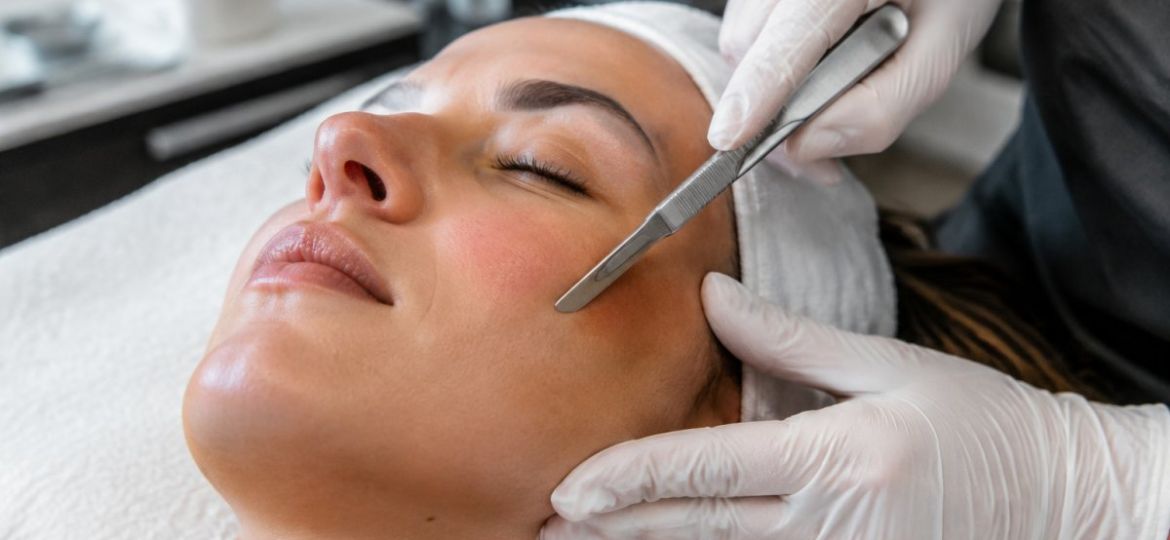
Does dermaplaning cause skin irritation? For some people it does, but mild redness is normal and usually fades within hours. The harder question is knowing when a reaction has crossed into something that needs attention. Most people who dermaplane at home or in a salon will see some pinkness, tightness or a slight sting, and that alone is not a sign that something went wrong. The trick is learning to tell ordinary recovery apart from a problem that needs a call to your provider.
That glow can hide early irritation, so check your skin again the next morning and the day after.
Normal redness versus warning signs
Expected reactions are usually short-lived and stay within the treated area. Watch for these signs:
- Light pink or red color that fades within a few hours
- Mild tightness or dryness across the cheeks or forehead
- A faint warmth that settles without treatment
- Slight sensitivity to water, wind or a light touch on the first day
Warning signs look different. Contact your provider promptly if you see:
- Redness or swelling that gets worse after the first day instead of better
- Blistering, oozing, crusting or pus
- Burning that spreads beyond the treated area
- Itching that does not ease and disturbs your sleep
- Bumps, small raised spots or a rash that keeps growing
If anything in the second list appears, stop using any product on that skin and get it checked.
How Long Dermaplaning Skin Irritation Typically Lasts
Mild irritation often fades within a few hours to about two days. Skin that is very dry or was already reactive may take a bit longer to settle.
If redness or tightness is still clearly present after three to four days, that is worth a professional look. Irritation that lingers past a week, or that flares up again after it seemed to calm, should be checked rather than waited out.
Irritation timing varies, but the article gives a rough guide to how long each stage usually lasts.
| Stage | Typical duration | When to act |
|---|---|---|
| Mild irritation | A few hours to about two days | Usually none needed |
| Dry or previously reactive skin | Somewhat longer than mild cases | Monitor closely |
| Redness or tightness still present | Beyond three to four days | Get a professional look |
| Lingering or recurring irritation | Past one week, or returning | Get it checked |
Why Dermaplaning Causes Irritation: Friction, Pressure and the Skin Barrier
Dermaplaning works by gliding a sterile blade across the skin at a shallow angle. That motion removes dead surface cells and fine vellus hair. Any time the outer layer is cleared, the skin barrier is temporarily thinner, so it can react more easily to friction, cleansers, sun and dry air.
Irritation tends to come from three sources:
- Friction: Pressing too hard or going over the same spot many times
- Pressure: Blade angle that is too steep, which can scrape rather than glide
- A weakened barrier: Skin that is already dry, sunburned or inflamed going into treatment
Keeping the skin calm before the session and treating it gently afterward lowers the chance of a bad reaction. This is also why a trained provider’s technique matters. They control pressure and angle in a way many people find hard to match on their own.
Is Dermaplaning Bad for Your Skin? What Dermatologists Say
Problems are more common with aggressive technique, dull or reused blades, very frequent sessions, or skin that is already irritated.
If you have an active skin condition, a history of keloids, or you are using prescription treatments that thin the skin, talk with a dermatologist before booking. Those situations call for individual advice rather than a general answer.
Step-by-Step Response to Irritation by Severity
Match your response to how bad the reaction is, and use the timeline below to decide whether you are looking at ordinary recovery or something that needs a call. A reaction that worsens after the first day, spreads beyond the treated area, or returns after calming is the pattern to take seriously.

Mild redness and tightness (expected)
- Pause active products such as exfoliants, retinoids, and acids for 3 to 5 days.
- Rinse with lukewarm water and a gentle, fragrance-free cleanser.
- Apply a simple, fragrance-free moisturizer with ceramides or glycerin to support the barrier.
- Avoid direct sun and use a mineral sunscreen daily.
- Recheck in 24 to 48 hours. Most mild cases settle by then, and tightness usually resolves before redness fully fades.
Persistent burning or stinging (contact irritation)
- Stop all products on the affected area, including cleansers, and rinse with cool water only for the first 24 hours.
- Pat dry with a clean towel. Do not rub.
- Apply a plain, fragrance-free moisturizer or a thin layer of petrolatum if the skin feels raw.
- Avoid heat, steam, exercise that causes heavy sweating, and sun exposure until the burning stops.
- If burning persists beyond 24 to 48 hours or intensifies, contact your provider or a dermatologist.
Suspected contact dermatitis (rash, itching, spreading redness)
- Stop every product that touched the treated area, including sunscreen and makeup, and note what you used so you can identify the trigger.
- Rinse gently with cool water and pat dry.
- Do not apply hydrocortisone or other medicated creams without guidance, since the wrong product can worsen some reactions.
- Contact your provider or a dermatologist the same day for advice on whether an over-the-counter or prescription treatment is appropriate.
- Do not pick at bumps or blisters, which raises the risk of infection and scarring.
Signs of infection or a serious reaction (urgent)
Seek urgent care if you notice any of the following:
- Pus, oozing, crusting, or a foul odor
- Spreading warmth, swelling, or red streaks beyond the treated area
- Fever or chills
- Swelling of the face or lips, trouble breathing, or throat tightness, which can signal a serious allergic reaction
- Blisters that are large, painful, or multiplying
Watch out: a reaction that looks like a breakout but appears only in the treated area within a day or two of treatment is more likely to be contact irritation than acne, and treating it with acne products can make it worse.
Aftercare, Products to Avoid and Who Should Skip Dermaplaning
For the first few days, keep your routine simple: a gentle, fragrance-free cleanser, a fragrance-free moisturizer, and daily sunscreen. The goal is barrier support, not correction. Look for ceramides, glycerin, panthenol, and squalane, which are commonly used to support dry or stressed skin. Avoid anything that stings on contact, and patch-test new products on the jawline before applying them to the full face.
Ingredient-specific pause and reintroduction guide
Not all actives are equally irritating after dermaplaning, and the reintroduction timeline matters as much as the pause. Use this as a practical guide, and adjust with your provider if your skin is reactive.
- Retinoids (tretinoin, adapalene, retinol): Pause for at least 3 to 5 days after treatment. Reintroduce at the same strength you used before, starting every third night for a week before returning to your normal schedule. Do not layer a retinoid with an exfoliating acid on the same night during reintroduction.
- Exfoliating acids (glycolic, lactic, salicylic, mandelic): Pause for 5 to 7 days. Salicylic acid can be more drying on already-compromised skin, so wait until redness and tightness have fully resolved. Reintroduce one product at a time, no more than twice a week at first.
- Benzoyl peroxide: Pause for 3 to 5 days. It can be drying and irritating on freshly exfoliated skin, so reintroduce as a short-contact wash rather than a leave-on treatment for the first week.
- Fragranced products (toners, essences, scented moisturizers, essential-oil blends): Pause until the skin is completely calm, then reintroduce cautiously. Fragrance is a common trigger for contact reactions, and freshly exfoliated skin absorbs and reacts more readily.
- Vitamin C (L-ascorbic acid): Pause for 3 to 5 days. Lower-pH vitamin C can sting on compromised skin; a gentler derivative may be better tolerated during reintroduction.
- Physical scrubs and cleansing brushes: Avoid for at least 7 days. Mechanical exfoliation on top of dermaplaning compounds barrier disruption.
A common pattern is to reintroduce one active at a time, every 3 to 4 days, so you can tell which product causes a reaction if one appears. Watch out: reintroducing several actives on the same night makes it impossible to identify the culprit if irritation returns.
Professional versus at-home dermaplaning
The tool is similar, but the risk profile is not.
At-home dermaplaning tools vary widely in blade quality and hygiene. Reusable handles, shared tools, and dull blades raise the risk of nicks, uneven scraping, and infection. Many at-home users also press harder and make more passes than a professional would, which is a common route to friction irritation and barrier disruption.
Who should skip dermaplaning or ask a professional first
Some people should postpone dermaplaning or get individual advice from a dermatologist before booking. These include:
- Active acne or breakouts in the treatment area, since the blade can spread bacteria and worsen inflammation
- Eczema, rosacea, or psoriasis flares
- Open wounds, cold sores, or sunburned skin
- A history of keloid scarring
- Recent chemical peels, laser treatments, or waxing in the same area
- Prescription retinoid use or other treatments that thin the skin
- A compromised skin barrier from over-exfoliation or a recent reaction
If you are unsure whether your skin is ready, ask your provider to assess it before the session rather than after irritation appears.
Booking a Gentle Dermaplaning Session With a Licensed Professional
A professional session can help reduce irritation risk, since a trained esthetician manages blade angle and pressure and can advise whether your skin is ready for treatment.
At iBrow & Beauty Boutique Inc., dermaplaning is one of the skin and beauty services we provide. Before your appointment, tell your provider about any sensitivity, recent treatments or skin conditions so they can adjust the session. For current service details and booking, visit the booking and pricing page on our website.
Frequently Asked Questions
Can dermaplaning cause a rash or breakouts?
Yes, dermaplaning can occasionally trigger a rash or breakouts, especially on skin that is already sensitive or inflamed. Redness and mild bumps often settle within a day or two. A rash that spreads, blisters, oozes or itches intensely may signal contact dermatitis or infection, and should be assessed by a dermatologist. Avoid picking at any bumps, keep the area clean, and hold off on new active products until the skin has calmed. Reporting the reaction to your provider helps them adjust future sessions for your skin type.
Is dermaplaning safe for sensitive skin?
Dermaplaning can be done on sensitive skin, but it calls for a gentler approach. A licensed professional can adjust pressure and session length to suit sensitive skin and can review your history before treatment. People with active acne, rosacea flare-ups, eczema, open lesions or recent chemical peels are often advised to wait. Sensitive skin is more likely to show redness and tightness afterward, so a fragrance-free, barrier-supportive aftercare routine matters more than usual.
Why does my face burn after dermaplaning?
A burning sensation usually comes from the skin barrier being temporarily thinned by exfoliation, which lets products and air irritate the nerve endings underneath. It is most common right after treatment and often fades within a few hours to a day or two. Skincare with alcohol, fragrance, acids or retinoids can intensify it. Cool compresses and a plain, fragrance-free moisturizer usually help. Burning that worsens, lasts several days or comes with blistering should be checked by a medical professional.
How long does it take your skin to recover from dermaplaning?
Most people see redness and tightness settle within about 24 to 48 hours, and mild irritation often resolves within one to two days. Smoothness and makeup application generally feel normal again within a few days. Recovery takes longer if the skin was over-exfoliated, scraped too aggressively or already compromised. If irritation persists beyond a week, or gets worse instead of better, contact your provider or a dermatologist rather than waiting it out.

