

Last Updated: November 22, 2026
Quick Summary
Most clients find microblading uncomfortable but manageable rather than sharply painful, since the strokes are shallow and feel like light scratching or pressure. Numbing cream usually helps, and how much microblading painful feels varies with your skin, tolerance, and the artist’s technique.
- Most clients describe microblading as light scratching or pressure, not sharp pain.
- Stinging is most likely near the brow bone and the inner corner, where skin is thinner.
- Many clinics apply topical numbing cream before starting; ask which products your artist uses.
- Tenderness and warmth in the first 24 hours are normal, and most soreness fades within a week.
- Tell your artist right away if sensation returns during the session so they can re-numb you.
Table of Contents
- What Happens During a Microblading Appointment, Step by Step
- Does Microblading Hurt With Numbing Cream?
- Microblading Pain vs. Tattoo Pain: How the Two Compare
- Pain Timeline From Consultation Through Healing
- Microblading Pain Aftercare and How Long Soreness Lasts
- Preparing as a First-Time Client and Knowing When to Call Your Artist
- Frequently Asked Questions
If you are a beginner thinking about microblading, the first question is usually the same: is microblading painful? Most clients describe it as uncomfortable but manageable, not the sharp pain they picture. The honest answer depends on your skin, your tolerance, and the artist’s technique. For a direct look at whether microblading is painful, that page covers what clients typically feel.
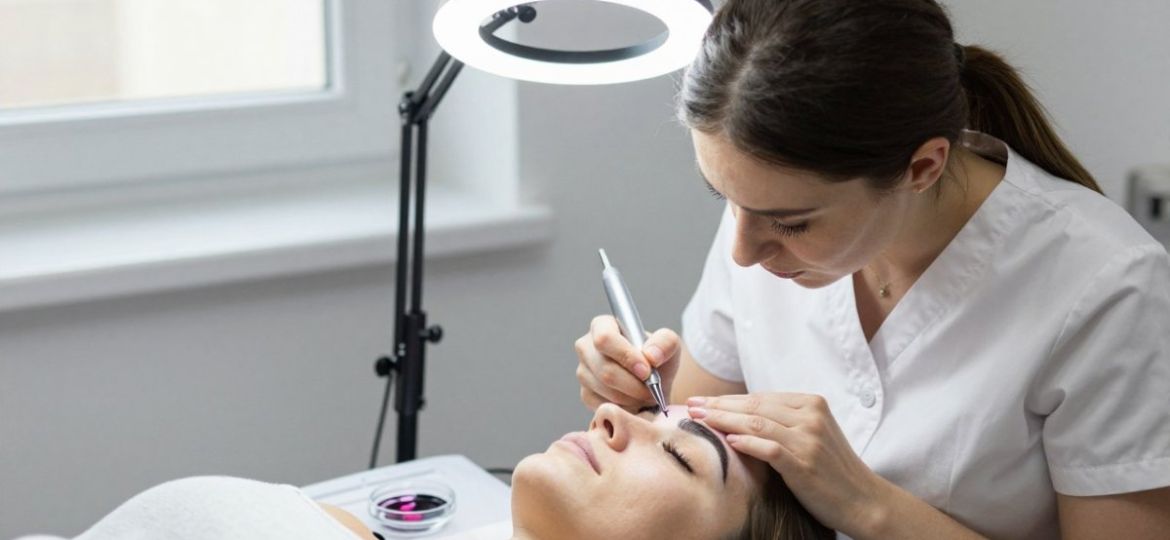
Microblading uses a handheld tool with tiny blades to deposit pigment into the upper layer of the skin. Because the strokes are shallow, most people feel a light scratching or pressure sensation rather than the deeper sting of a machine tattoo. Your skin will still react, and that is normal.
What most first-time clients feel:
- A light scratching or pressure sensation along each stroke
- Some stinging, especially near the brow bone and the inner corner
- Mild tenderness or warmth afterward, similar to a scrape
Pain sensitivity varies a lot from person to person. Hormones, stress, and how tired you are that day can all change how the process feels.
What Happens During a Microblading Appointment, Step by Step
Knowing the general sequence of a microblading appointment in advance can help a beginner feel more in control. You can review the full step-by-step microblading process to see each stage in order.

1. Consultation and brow mapping (15-30 minutes). No pain here. The artist talks through your goals, reviews your skin type and any medications, and maps your brow shape with a measuring tool and marking pencil. Ask about numbing products, hygiene, and what happens if you need a break.
2. First numbing application (about 20 minutes). Many clinics apply a topical numbing cream to the brow area before starting; ask your artist which products they use.
3. Outline and first strokes. The artist begins depositing pigment along the mapped shape. Most beginners describe a light scratching or pressure sensation, with occasional stinging near the brow bone and inner corner where skin is thinner. Strokes are placed in small sections so the artist can check symmetry and adjust.
4. Mid-procedure re-numbing. Tell your artist if you feel sensation returning during the session so they can address your comfort.
5. Final review and cleanup. Expect mild warmth and tenderness after the procedure, similar to a light scrape.
Breaks are normal during microblading. If you need to sit up, pause, or stop, say so.
Watch out: If an artist dismisses your discomfort or pressures you to continue through significant pain, that is a reason to pause the session and reassess, comfort and consent are part of professional practice.
Does Microblading Hurt With Numbing Cream?
Numbing cream is commonly used to make microblading feel more comfortable. It reduces surface sensation, so the strokes feel more like light pressure than a scratch. It does not remove all sensation, and many clients still feel some pressure or stinging.
Ask your artist which product they use and whether they reapply during the session, and talk through any sensitivities before your appointment.
Microblading Pain vs. Tattoo Pain: How the Two Compare
Clients often compare microblading to a regular tattoo. The main difference is depth. Microblading places pigment in the upper skin layer, while machine tattooing goes deeper and uses a continuous needle. Many people report that microblading feels lighter than machine tattooing, though it is still a sensation you will notice.
- Microblading: light scratching, pressure, and short sessions
- Traditional tattooing: buzzing, deeper stinging, and longer sessions
- Both: comfort depends on the artist, the placement, and your own tolerance
If you have had a tattoo before, you may find microblading easier, but everyone reacts differently.
Pain Timeline From Consultation Through Healing
Knowing what to expect at each stage can ease first-time nerves. The microblading healing process page shows how the brows change over the full healing period.
- Consultation: no pain, just talking through your goals
- Numbing period: little to no sensation as the cream takes effect
- During the procedure: light scratching or pressure, with occasional stinging
- First 24 hours: tenderness, warmth, and some swelling
- Days 2 to 7: itching and flaking as the skin heals
- Weeks 2 to 6: the brows settle and the color softens
Here is what to expect at each stage, from consultation through healing.
| Stage | What to expect | Pain level |
|---|---|---|
| Consultation | Talking through goals and mapping the brow shape | No pain |
| Numbing period | Cream takes effect | Little to no sensation |
| During the procedure | Strokes are placed | Light scratching or pressure, occasional stinging |
| First 24 hours | Tenderness and some swelling | Tenderness and warmth |
| Days 2 to 7 | Skin heals | Itching and flaking |
| Weeks 2 to 6 | Brows settle and color softens | Settles |
Microblading Pain Aftercare and How Long Soreness Lasts
Aftercare is where beginners most often confuse normal healing discomfort with a problem. Our page on microblading aftercare instructions lists exactly what to do each day during healing. The goal is to keep the area clean, minimize irritation, and know which sensations are expected versus which warrant a call.
What is normal: Tenderness, warmth, and mild swelling in the first 24 hours are common. Days 2 through 7 often bring itching and flaking as the skin heals, resist scratching, since picking can pull pigment and prolong soreness. By weeks 2 to 6, the brows settle and color softens. Most soreness fades within the first week, though some tenderness can linger for about seven days.
Aftercare that supports comfort:
- Right after the procedure, gently pat the area with a clean tissue every hour as needed.
- For the first seven days, wash your brows gently with lukewarm water morning and night, then apply aftercare cream at night only.
- In the second week, keep the brows as dry as possible and avoid harsh cleansers, exfoliants, and makeup over the area.
- Avoid heavy sweating, saunas, and direct sun exposure during early healing, since heat and friction can increase irritation.
When to call your artist or a healthcare provider: If pain worsens instead of easing, or you notice spreading redness, unusual swelling, heat, or discharge, contact your artist or a healthcare provider promptly. These signs can point to infection and should not be ignored. A brief check-in is always better than waiting.
Watch out: Itching is a normal part of healing, but scratching or picking at flakes can reopen the skin, increase soreness, and affect pigment retention, keep hands off and use the aftercare cream as directed.
Preparing as a First-Time Client and Knowing When to Call Your Artist
Preparation makes the experience smoother. Our guide on how to prepare for your microblading appointment walks through each step before you arrive. Before your appointment, consider these steps:
- Avoid caffeine, alcohol, and blood thinners for at least 24 hours, unless your doctor says otherwise
- Skip tanning and harsh exfoliants on your brows for several days
- Eat a light meal beforehand so you feel steady during the session
- Arrive with a clear list of questions about pain, healing, and touch-ups
Call your artist if your comfort level changes during the session, if you have a new skin reaction, or if you have concerns during healing. Clear communication is one of the best ways to keep the experience comfortable.
Ready to book your consultation? Visit the iBrow & Beauty Boutique Inc. website to book a consultation and talk through your comfort needs with the team.
Frequently Asked Questions
Is microblading painful for beginners?
Most first-time clients describe microblading as uncomfortable rather than painful. The sensation is usually a light scratching or pressure along the brow, and many people say it feels less intense than they expected. Pain levels vary with individual sensitivity, skin thickness and how well the brow area is numbed. Topical numbing cream applied before the session is commonly used to reduce discomfort. Speak with your artist during your consultation about your sensitivity so the appointment can be planned around your comfort.
Does microblading hurt with numbing cream?
Numbing cream is commonly used to make the procedure more comfortable. Numbing does not eliminate sensation entirely, so some clients still feel pressure or mild stinging. Your artist should apply the cream and allow it time to work before starting. If you have a known reaction to topical anesthetics, tell your artist before the appointment so an alternative can be discussed.
How long does soreness last after microblading?
Soreness that gets worse after the first few days, or that comes with heat, swelling or discharge, should be reported to your artist or a medical professional promptly. Following your aftercare instructions closely supports a faster, more comfortable healing period.
Is microblading pain different from tattoo pain?
Microblading is generally described as less intense than traditional tattooing because the tool deposits pigment only into the superficial layers of the skin with very fine strokes. Traditional tattoo machines often work deeper and at a higher frequency, which many people feel as more pronounced. Individual experiences still differ, and factors such as pain tolerance and the area treated play a role. Your artist can explain what to expect based on your own comfort level.

